
Understanding Epitopes: Continuous vs. Discontinuous
Epitopes, the specific regions of an antigen recognized by antibodies, play a crucial role in the immune response. There are two main types of epitopes:
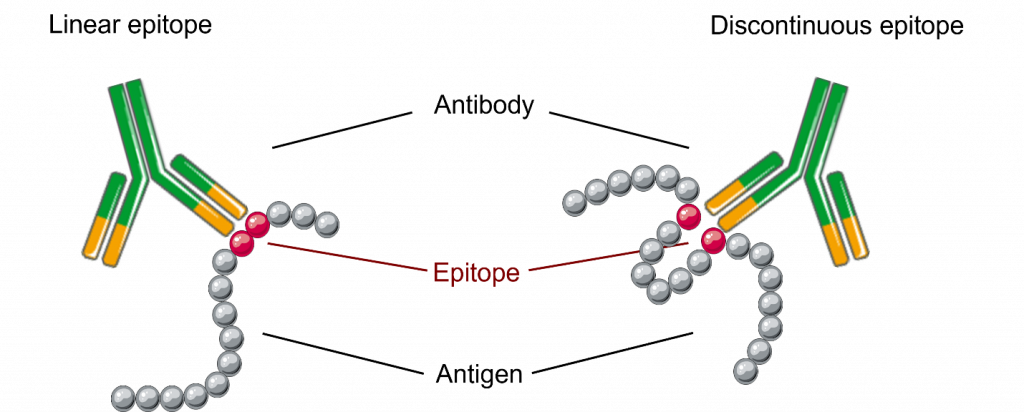
- Continuous Epitopes: These are linear stretches of amino acids that can be recognized by antibodies in their primary structure.
- Discontinuous Epitopes: These are formed by amino acids brought together in the folded, three-dimensional structure of proteins. Over 80% of epitopes are discontinuous, making them more challenging to identify and study.
Importance of Epitope Mapping
Epitope mapping is essential for various applications in the biomedical field, including:
- Vaccine Development: Understanding the epitopes targeted by protective antibodies helps in designing effective vaccines that elicit a strong immune response.
- Therapeutic Antibodies: Identifying the epitopes recognized by therapeutic antibodies is crucial for optimizing their specificity, affinity, and efficacy.
- Diagnostics: Epitope mapping enables the development of sensitive and specific diagnostic tests for infectious diseases and other conditions.
Techniques for Epitope Mapping
Several techniques are used for epitope mapping, each with its advantages and limitations:
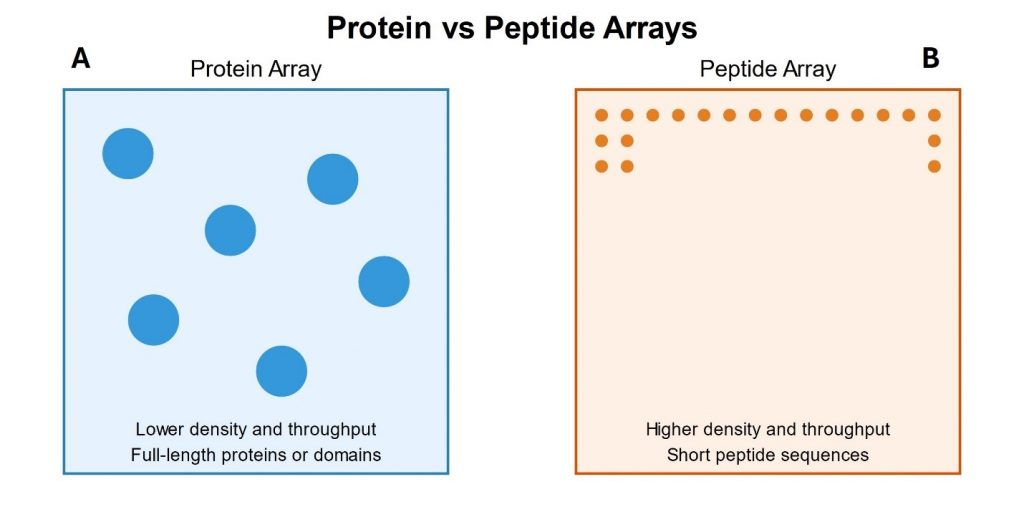
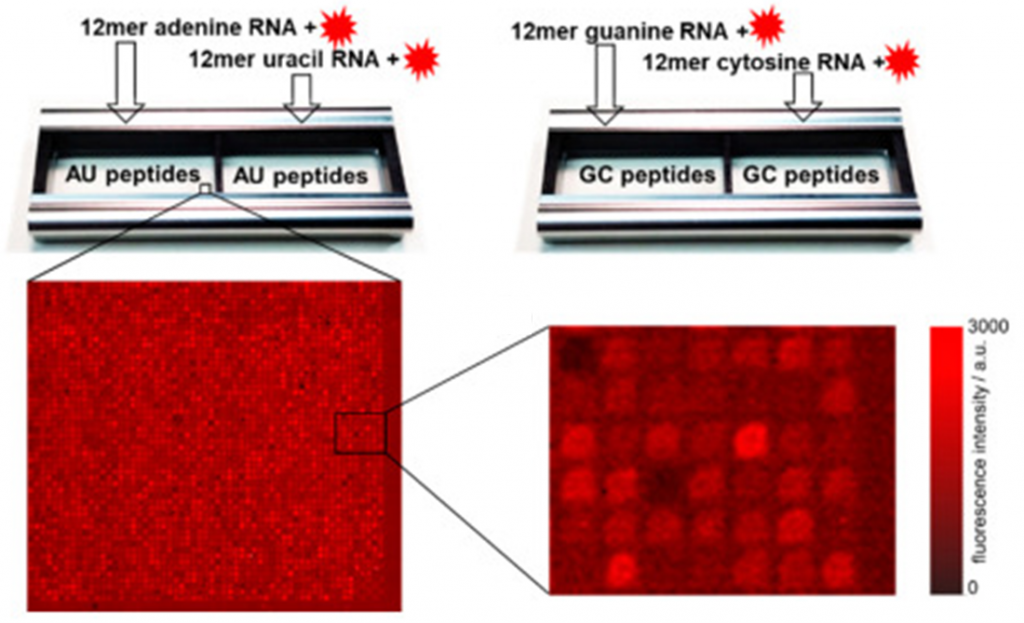
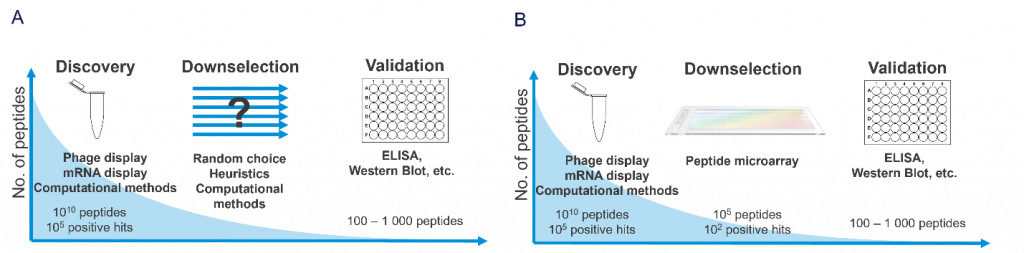
- Peptide Microarrays: High-density peptide microarrays allow for the screening of thousands of peptides, covering the entire sequence of a target protein. This technique is particularly useful for identifying both continuous and discontinuous epitopes.
- Phage Display: This method involves displaying peptides on the surface of bacteriophages and screening them against antibodies to identify binding epitopes.
- X-ray Crystallography: This technique provides high-resolution structural information on antigen-antibody complexes, enabling the precise identification of epitopes.
Our Solution: Advanced Discontinuous Epitope Mapping
We specialize in the advanced application of discontinuous epitope mapping using high-density peptide microarrays and computational biology. Our approach leverages data from the UniProt Atlas and AlphaFold, enhanced by our proprietary algorithms, to design peptide libraries that accurately reflect the three-dimensional structure of target proteins.
Key features of our platform include:
- Computational Library Design: Ensuring peptide libraries represent true protein structures.
- Advanced Cyclization: Mimicking proteins’ natural conformations for presenting native-like epitopes.
- High-Throughput Capability: Screening up to 200,000 custom peptides to cover all possible conformational epitopes.
Why Choose Us for Epitope Mapping?
Our unique combination of high-density peptide microarrays and computational biology makes our platform the ideal choice for finding discontinuous epitopes. With our expertise and cutting-edge technology, we can accelerate your research and help you develop more effective vaccines, therapeutic antibodies, and diagnostics.
For detailed insights and to explore how our advanced discontinuous epitope mapping services can accelerate your research, contact our team of experts today.